They can, and in the right circumstances the difference is dramatic. But new windows reduce noise for reasons that have very little to do with what most window advertising talks about, and buying the wrong upgrade is an expensive way to end up with the same traffic in your living room.
If you live near Highway 7, the 400, the 407 or the Barrie GO line, this is probably the reason you are reading a window page at all. So here is what actually works, in the order it works.
The Short Answer
Noise gets through a window in two ways: through the glass, and around it. Around it is almost always the bigger problem, and it is the cheaper of the two to fix.
If your existing windows are old, badly sealed or no longer closing tightly, sealing the perimeter and getting the sashes to compress properly will do more for the noise than any glass upgrade. If your windows are already sealed and the noise still comes through, then the glass is the limiting factor and the upgrade is worth paying for.
Most people are in the first category and get sold the second.
Why Concord and Vaughan Have a Noise Problem
The geography here works against quiet. Concord sits inside the triangle formed by Highway 400, Highway 407 and Highway 7, with the CN MacMillan yard to the east. Vaughan is cut through by the 400 and by the Barrie rail corridor. These are not the sounds of a busy street. They are steady, low frequency sound sources that run through the night, and low frequency is the hardest kind to keep out.
That distinction matters when you go shopping. A window that performs well against voices and birdsong can perform poorly against a truck on an expressway half a kilometre away, because the two are entirely different frequencies and the mechanisms that stop them are different too.
What Actually Blocks Sound
Mass
Heavier materials transmit less sound. Thicker glass blocks more than thin glass, which is why the cheapest single upgrade in a noise job is going from three millimetre to five or six millimetre glass on the exposed elevation. It costs a fraction of a full triple pane upgrade and it does real work.
Asymmetry
This is the one that surprises people. Two panes of the same thickness resonate at the same frequency, so they let that frequency through together, like two tuning forks. Two panes of different thickness do not, so the frequency one lets through, the other stops.
An asymmetric double glazed unit, say four millimetres on one side and six on the other, outperforms a symmetric triple pane of similar total weight against road noise. That is not a marginal effect. It is the single most cost effective thing you can specify, and you have to ask for it, because it is not standard.
Air gap width
A wider cavity between panes reduces sound transmission, and the useful range for noise is wider than the useful range for heat. Thermally, the sweet spot for an argon filled cavity is around twelve to sixteen millimetres. Acoustically, wider keeps helping well past that. This is why the quietest windows are often not the most thermally efficient ones, and why the two goals sometimes pull in opposite directions.
Lamination
Laminated glass is two sheets bonded with a plastic interlayer, and that interlayer damps vibration rather than just resisting it. For traffic and rail noise, a laminated pane is the most effective single component available in a residential window. It is what gets specified on homes backing directly onto an expressway.
Sealing
All of the above is irrelevant if air can get through, because where air passes, sound passes. A perfectly specified acoustic unit in a frame with a failed weatherseal performs like an ordinary window with the vent open.
Why Triple Pane Is Not Automatically Quieter
This is the most common misunderstanding in the whole category, and it costs homeowners real money.
Triple pane glass is excellent for heat. Three sheets, two gas cavities, and a substantial reduction in heat loss. For sound, the picture is more complicated. Standard triple pane units use three sheets of the same thickness with two narrow cavities, and that symmetry is exactly the arrangement that lets a specific band of frequencies through. Worse, the narrow cavities that make it thermally efficient are acoustically less useful than one wide cavity.
In practice, a well specified asymmetric double glazed unit with a wide cavity often beats a standard triple pane against road noise, while a standard triple pane beats it comfortably on heat. If your priority is quiet, say so explicitly, because the default recommendation will be triple pane and it is the right answer to a different question.
Where triple pane does win on noise is when it is specified asymmetrically, with panes of differing thickness or a laminated outer sheet. That configuration is very good at both jobs and it costs accordingly. Our triple pane windows page covers what the standard configuration does and does not do.
The Gaps That Undo Everything
Before spending on glass, it is worth knowing where sound is actually entering, because on most older homes the answer is not through the middle of the pane.
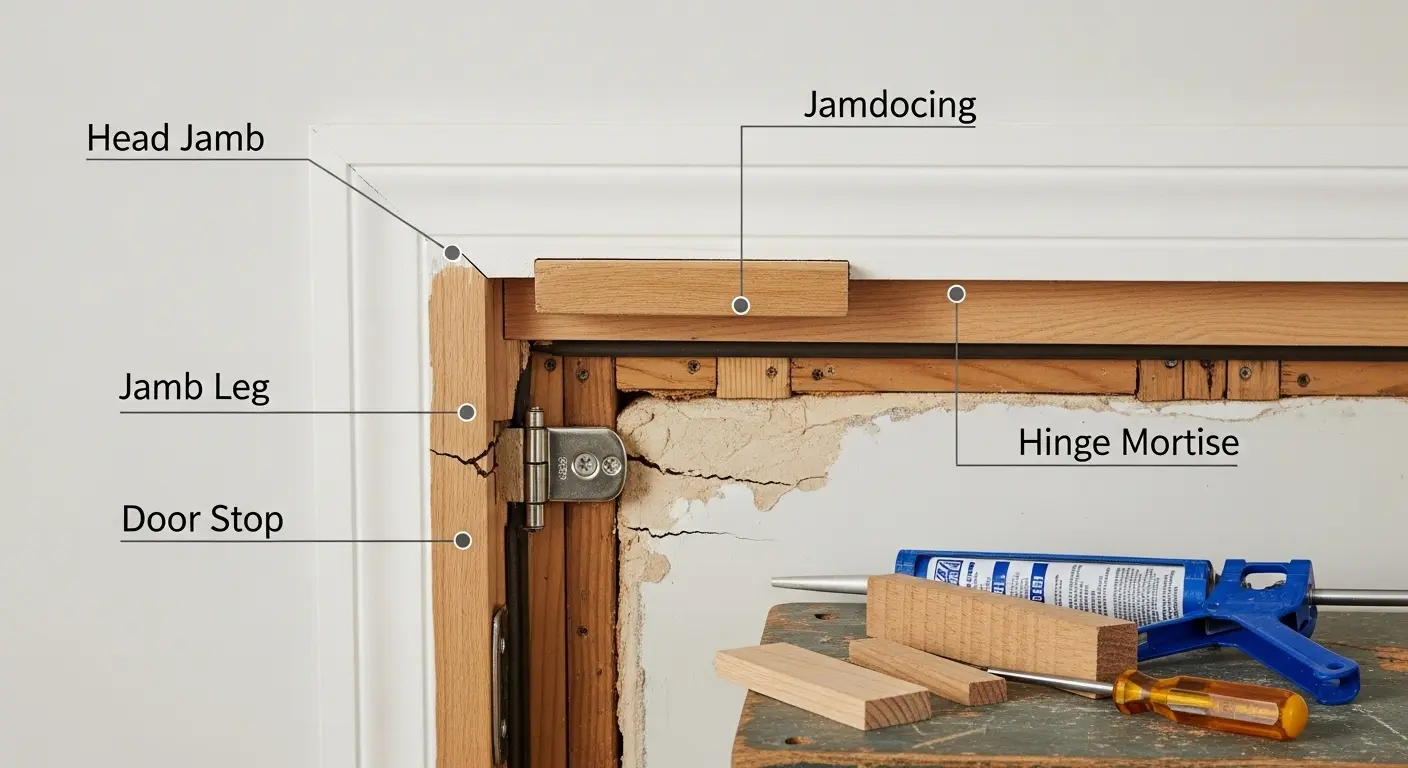
The perimeter behind the trim. On homes from the 1970s and 1980s the gap between the window frame and the rough opening was often stuffed loosely with fibreglass, which does almost nothing for sound. A proper air seal there, foam plus a sealed interior air barrier, is one of the highest value changes in the entire job.
Failed weatherstripping. A sash that no longer compresses evenly leaves a continuous slot along one edge. Close the window on a sheet of paper and pull. If it slides freely, that edge is open.
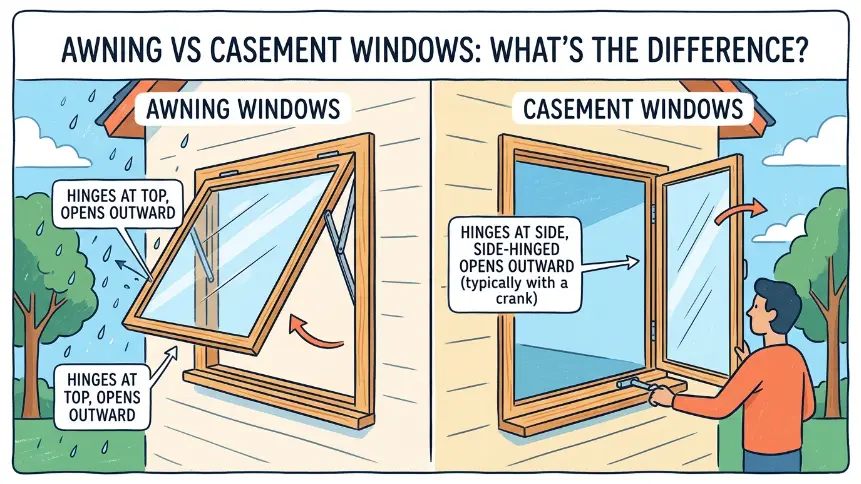
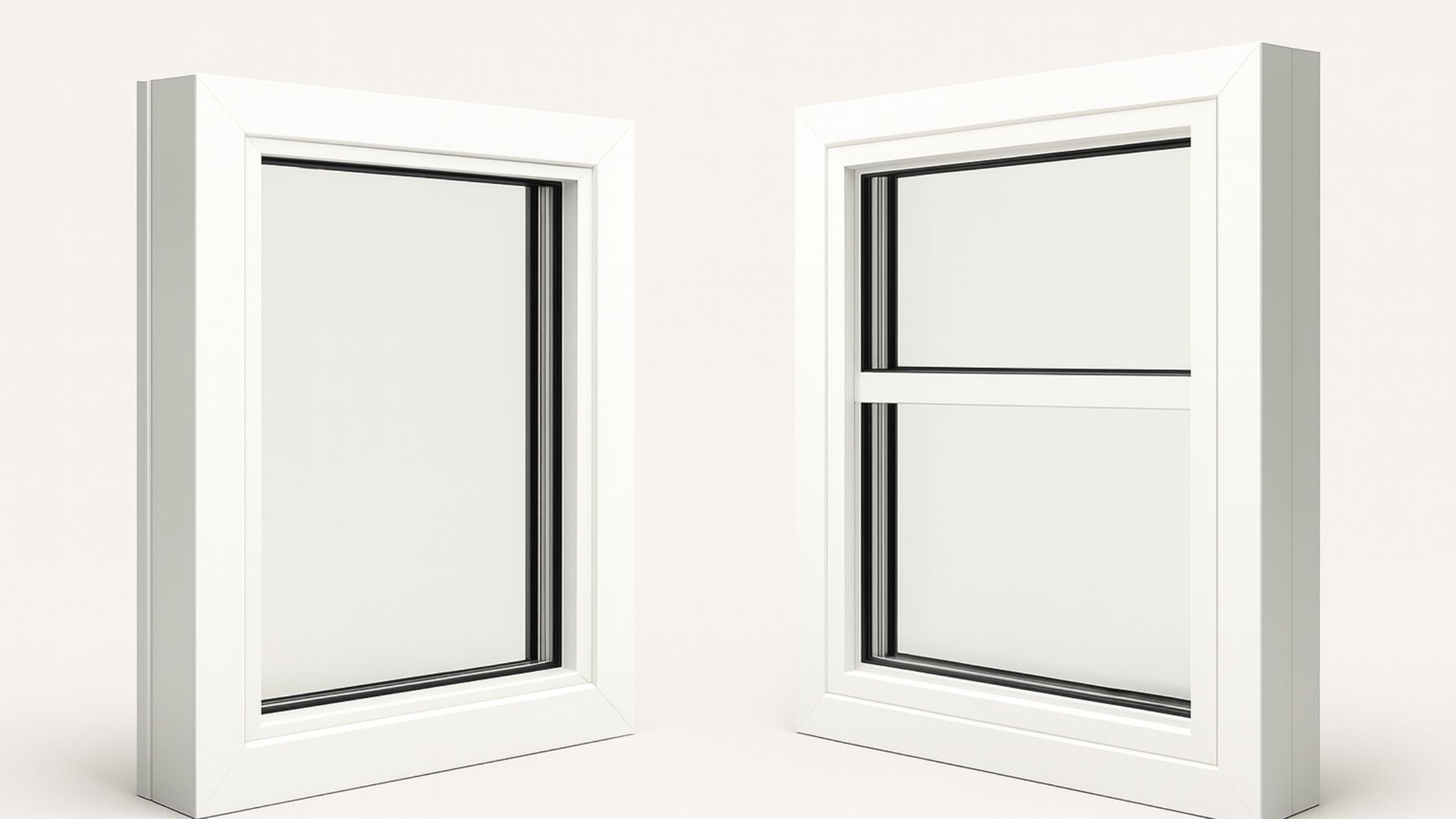
Worn slider tracks. Horizontal sliders seal less well than casements by design, and a worn track makes it worse. A casement pulls tight against a compression seal when you crank it closed, which is why casements generally outperform sliders on both noise and air leakage.
Trickle vents and old aluminum frames. An aluminum frame with no thermal break conducts sound through the metal as well as heat. On these, replacing the glass alone leaves the conductive path in place.
What to Expect, Realistically
Nobody should promise you silence. A window is one part of a wall assembly, and sound also comes through the wall, the roof and the door. What a good acoustic upgrade delivers is a change in character as much as in volume: the sharp edge comes off traffic, individual vehicles stop being distinguishable, and the sound becomes a background you stop noticing rather than an event you keep hearing.
Two practical points set expectations. First, the improvement is only as good as the weakest opening on that elevation. Upgrading nine windows and leaving the tenth means the tenth is what you hear. Second, if a room has a door to a balcony or a patio, that door is usually the weakest point in the whole elevation, and no amount of window work compensates for it.
A Sensible Order of Spending
- First, seal what you have. Replace flattened weatherstripping, adjust the sash compression, and check that the perimeter behind the trim is actually sealed. This is cheap and it is often most of the improvement.
- Second, target the exposed elevation only. Noise comes from a direction. Upgrading the street facing or highway facing side and leaving the sheltered side standard halves the cost with very little loss.
- Third, specify asymmetric glass. Different pane thicknesses in the same unit. A small cost premium for a genuine improvement.
- Fourth, add lamination on the worst rooms. Bedrooms facing the source. This is where the money makes the most difference to how you actually live in the house.
- Fifth, consider a wider cavity. If frame depth allows it, ask what the widest available cavity is for the unit you are buying.
Following that order rather than starting at the most expensive glass is what separates a noise job that works from one that spends the whole budget in the wrong place.
Doors Matter More Than People Think
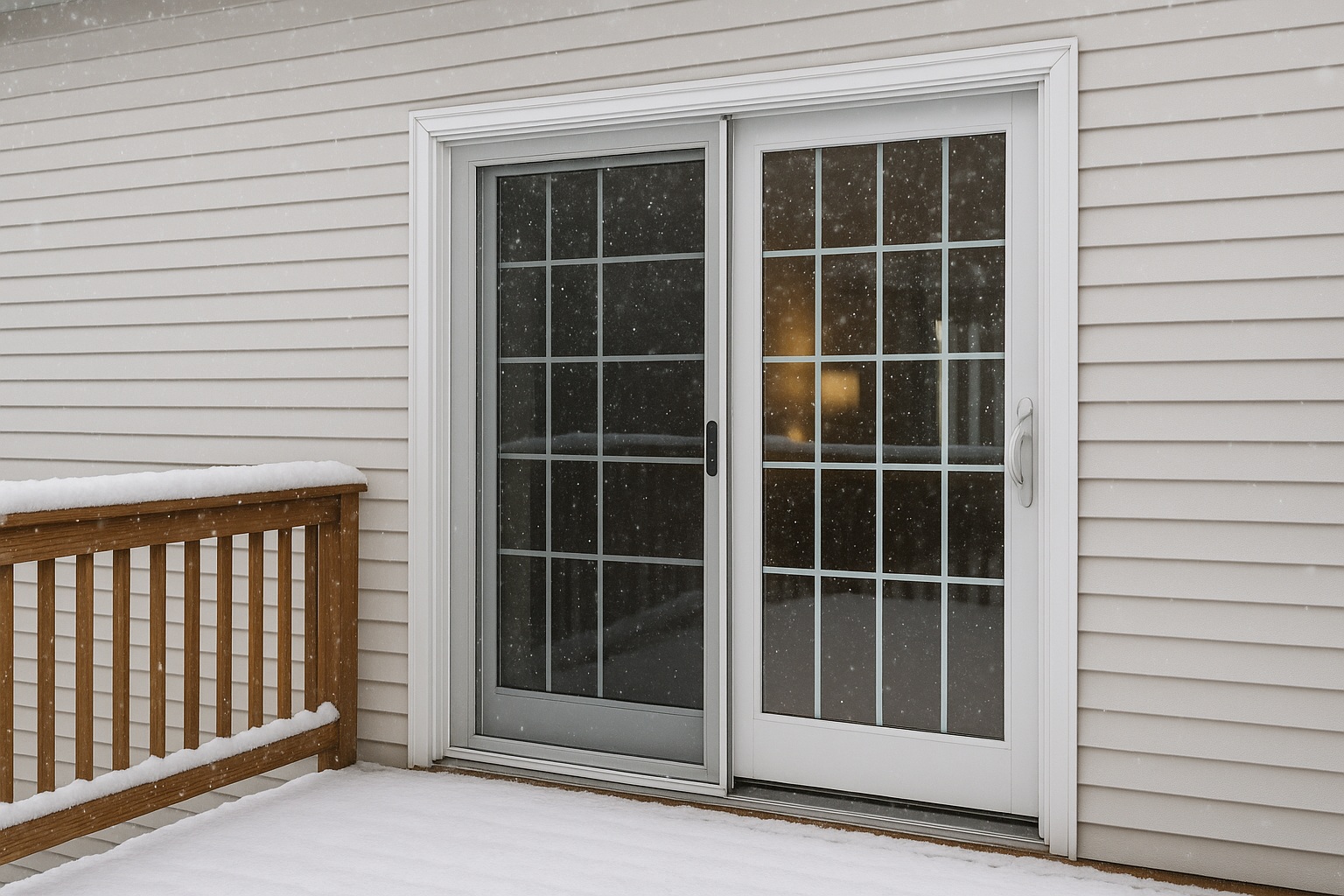
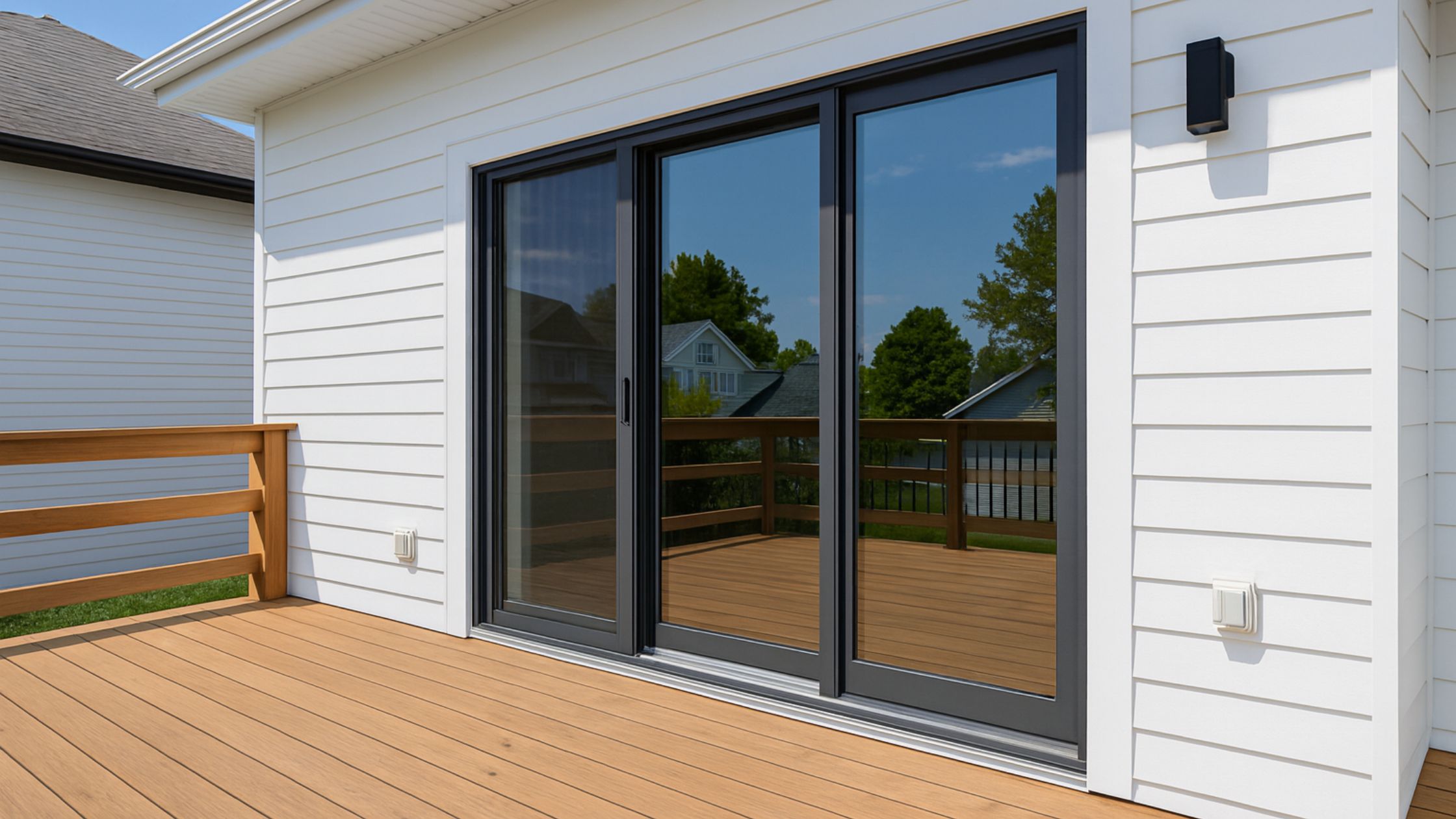
A patio door is a large sheet of glass in a frame that slides, and sliding assemblies seal less tightly than hinged ones. On a room facing a busy road, the patio door is frequently the dominant path for noise even when the windows around it have been upgraded.
Hinged French patio doors seal better than sliders because they compress against a seal rather than running past one. Where a slider is staying, worn rollers and a worn track are worth addressing on their own, because a panel that no longer runs true does not close tight at either end.
Reading the Rating on a Quote
Windows sold for acoustic performance carry a rating, and knowing what the number means stops you comparing two quotes that are not comparable.
STC, Sound Transmission Class, is the number you will see most often. It is a single figure summarising how much sound an assembly stops across a range of frequencies. An ordinary double glazed residential window sits somewhere around the high twenties. Getting into the low to mid thirties is a noticeable improvement. Purpose built acoustic units reach the high thirties and beyond.
The limitation is that STC was developed for speech frequencies, and it weights those most heavily. Traffic and rail are lower. A window can carry a respectable STC number and still perform indifferently against a truck on the 400.
OITC, Outdoor Indoor Transmission Class, is the rating that was designed for exactly this problem. It weights the low frequencies that come from road, rail and aircraft. If you are buying for traffic noise, OITC is the number that tells you something useful, and it will always be lower than the STC for the same window.
If a quote gives you an STC figure and no OITC, ask for it. If nobody can supply one, that tells you the unit was not specified with outdoor noise in mind.
What the Rest of the Wall Contributes
There is a point past which more window does nothing, because the wall around it becomes the weak path. It is worth knowing where that point is before you spend.
A typical insulated stud wall with brick veneer performs far better acoustically than any window in it, so on a brick home the windows are usually the limiting element right up to the high end. On a wall with vinyl or aluminum siding over sheathing, the wall itself is a weaker barrier, and there is less headroom before upgrading the glass stops paying back.
Two other paths are worth checking on a noisy elevation. Old wall vents and dryer vents are direct holes through the assembly, and an unbaffled one on a road facing wall can undo a whole window upgrade on its own. Recessed light fittings in a ceiling below an unfinished attic do the same job in the other direction on a top floor room.
None of this argues against better windows. It argues for looking at the elevation as a whole before deciding what the glass has to achieve.
When Sealing Alone Is the Right Answer
There is a specific case where we tell people not to buy windows yet, and it comes up more often than you would expect on homes from the late 1990s onward.
If the frames are vinyl, under about twenty five years old, and structurally sound, and the complaint is noise rather than draughts or fogging, the problem is usually the seals and the hardware rather than the units. Weatherstripping flattens with age. Casement hinges and operators wear, so the sash no longer pulls fully home against the seal. Slider rollers wear and the panel stops meeting the jamb squarely.
All three are serviceable items. Replacing weatherstripping and adjusting or replacing the hardware restores the compression the window had when it was new, and on a unit that was decently specified in the first place that can recover most of the acoustic performance for a small fraction of the cost of replacement.
The honest test is the paper test round every edge of every window on the noisy elevation. If the paper grips everywhere, the seals are doing their job and the glass is genuinely the limit. If it slides out anywhere, start there.
Frequently Asked Questions
Do triple pane windows reduce noise?
They help, but less than most people assume. Standard triple pane units use three equal thickness panes with narrow cavities, and that symmetry is acoustically poor. An asymmetric double glazed unit with a wide cavity often does better against traffic noise for less money.
What is the quietest type of window?
A casement with laminated glass, panes of differing thickness and the widest cavity the frame allows. Casements seal better than sliders because they compress against the frame when closed.
Will new windows block train noise?
They will reduce it. Rail noise is low frequency and the hardest to stop, so lamination and mass matter more here than pane count. Expect a substantial reduction rather than removal.
Is it worth upgrading only the windows facing the road?
Usually yes. Noise arrives from a direction, and spending the budget on the exposed elevation gives most of the benefit at roughly half the cost.
Can I reduce noise without replacing my windows?
Often, partly. New weatherstripping, adjusted sash compression and a properly sealed perimeter behind the trim close the air paths that sound uses, and that is the cheapest improvement available. If the windows still let noise through once sealed, the glass is the limit.
Do window inserts or secondary glazing work?
Yes, and for noise specifically they can work very well, because they create a second sealed layer with a wide air gap. They are less common in Canada because they complicate cleaning and operation, but they are worth asking about on a heritage property where the original window has to stay.
The Practical Takeaway
Seal first, then target the exposed elevation, then specify asymmetric or laminated glass rather than defaulting to triple pane. Say the word "noise" out loud when you ask for a quote, because a quote written for heat loss and a quote written for sound are not the same quote.
Polaris Windows and Doors works throughout Concord and Vaughan, including the streets closest to Highway 7, the 400 and the rail corridor, and we will tell you when sealing your existing windows is the better spend. Get in touch for a measured quote that says what the glass is specified to do.