A door jamb is the vertical side part of a door frame. It supports the door, holds the hinges, receives the latch, and keeps the whole entry closing the way it should.
It may look like a small detail, but it affects more than most homeowners realize. When the jamb starts shifting, swelling, or softening, the whole door system begins acting up. Suddenly, the entry feels drafty, the lock stops lining up, and the frame looks tired. In homes facing cold weather, moisture, and constant daily traffic, that problem shows up fast.
Read on to see what a door jamb does, what goes wrong, and when repair stops being enough.
What Is a Door Jamb and Where Is It Located?
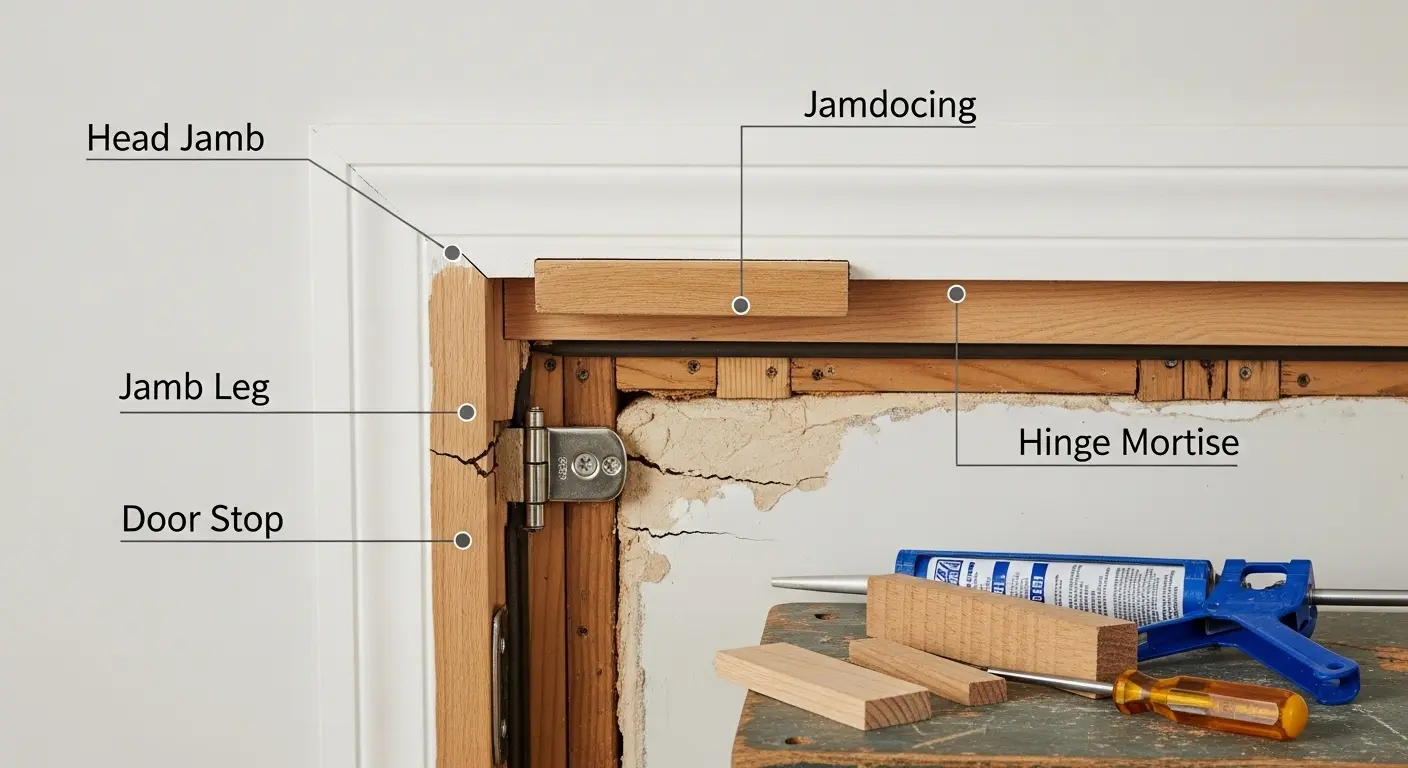
A door jamb is the vertical side section of a door frame. It supports the door, holds the hinges, receives the latch, and keeps the door aligned during opening and closing.
The top section is the head jamb, and together these parts form the main frame structure. You will find one jamb on each side of the doorway. One side is the hinge jamb.
The other is the strike jamb, where the strike plate helps the latch or deadbolt catch securely. On exterior doors, the jamb also works with the threshold, seals, and surrounding trim to support security, weather protection, and smooth daily use.
Read More: How to Remove a Sliding Glass Door Panel Safely Like a Pro? Easy Guide!
What Are The Features Of A Door Jamb?
A door jamb combines support, alignment, hardware placement, sealing support, and frame connection in one structural part. It helps the door slab swing properly, latch cleanly, and stay stable inside the opening.
1. Structural support
The jamb forms the main side support of the door frame. It holds the door slab in position and helps the frame stay square inside the rough opening during daily use.
This is one reason homeowners often start searching for door frame repair in Toronto when the entry begins to feel loose or uneven.
2. Hinge mounting surface
The hinge jamb carries the hinges and supports the swing path of the slab. This feature controls movement, keeps reveal lines consistent, and helps prevent sagging or scraping.
3. Latch and lock the receiving area
The strike jamb holds the strike plate and receives the latch or deadbolt. That makes it essential for closing action, lock alignment, and reliable security at the entry.
4. Head jamb connection
Each side jamb joins the head jamb at the top of the frame. Together, these parts create the frame shape that keeps the door opening square and stable.
5. Door stop support
Many jambs include or carry the door stop, which limits how far the slab closes. This helps the panel rest in the correct position and improves contact with the latch.
6. Sealing support on exterior doors
On an exterior door frame, the jamb supports weatherstripping and works with the threshold and door sill. These parts help reduce drafts, water entry, and seasonal heat loss.
That matters even more in older GTA entries, where homeowners often end up looking for front door replacement Mississauga after years of leaks or cold spots.
7. Connection to trim and outer frame parts
The jamb works beside the door casing on the interior and brickmould on many exterior entries. These connected parts cover gaps, protect edges, and finish the frame cleanly.
8. Base for proper installation and replacement
A jamb sets the reference line for fit, hardware position, and frame depth. That is why accurate jamb condition matters in a prehung door, door frame replacement, or later door jamb repair.
If you keep dealing with the same weak frame, another small repair may not solve much. In many cases, full door replacement services give you a more solid and lasting result.
Read More: Standard Door Size Guide: Dimensions & Measurement Tips
What are the Main Parts of a Door Frame?
A door frame includes the side supports, top member, bottom sealing parts, trim, and sealing components that keep the door stable, square, secure, and weather-resistant in daily use.
1. Head jamb
The head jamb is the top horizontal frame piece. It ties both side jambs together, keeps the opening square, and helps the door slab close in the right position. In older GTA homes, even a slight shift here can affect the full swing and closing line.
2. Side jambs
The two side jambs are the vertical supports of the frame. They carry the hinges, receive the latch hardware, and give the slab its main side-to-side stability. These parts take daily strain, especially on busy family entry doors.
3. Hinge jamb
The hinge jamb is the side jamb that holds the hinges. It carries the door’s weight, controls the swing path, and helps prevent sagging, scraping, and uneven reveal lines. That matters in many Toronto-area homes where seasonal movement can make a heavy front door feel off fast.
4. Strike jamb
The strike jamb is the latch side of the frame. It holds the strike plate and helps the latch or deadbolt close securely and line up cleanly. When this side shifts, homeowners often notice the first real symptom: the door won’t latch the way it used to.
5. Sill
The door sill sits at the bottom of many exterior frames. It connects the side jambs below and adds strength where foot traffic, moisture, and wear hit hardest. In the GTA, slush, wet boots, and repeated freeze-thaw exposure can wear this area down over time.
6. Threshold
The threshold covers and protects the sill. It helps manage water, supports sealing, and creates a durable transition point for daily entry and exit. This part becomes even more important during Toronto winters, when melting snow can collect around the front entry.
7. Door stop
The door stop is the raised strip inside the frame. It stops the slab at the correct depth and helps the door close snugly against the frame. If it sits out of position, the door may close loosely or feel uneven.
8. Door casing
The door casing is the trim around the frame. It hides the gap between the wall and frame, cleans up rough edges, and improves the finished interior look. It also helps older homes look cleaner after framing or replacement.
9. Brickmould
Brickmould is the thicker exterior trim around many entry systems. It protects the outer frame edge and gives the entry a more finished street-facing appearance. In areas like Mississauga, Oakville, and Vaughan, that curb-facing detail matters because homeowners care about both protection and appearance.
10. Weatherstripping
Weatherstripping seals the gap between the slab and frame. It helps block drafts, moisture, and cold air, which matters a lot in older Toronto-area entries. When this seal wears out, comfort drops fast, and heating loss becomes easier to notice.
11. Door sweep
A door sweep attaches to the bottom of the slab. It works with the threshold to keep out dust, moisture, pests, and unwanted air movement. That makes it especially useful in GTA homes dealing with wind, wet entryways, and winter drafts.
12. Mullion
A mullion sits between the door and a sidelight. It supports the frame layout and gives the jamb a stable point where hardware and trim still align properly. This becomes more important on wider front entries with decorative side glass.
13. Sidelight
A sidelight is the vertical glass unit beside the entry door. It brings in natural light, but it also changes the overall frame structure. Many GTA homeowners like sidelights for brightness, though they need solid framing to hold up well over time.
14. Astragal
An astragal seals the gap between double doors. It helps block air leakage and improves closure where two slabs meet at the centre. That seal matters more in cold-weather entries where even a small gap can let in noticeable drafts.
When these parts work together, the entry feels tight, smooth, and secure. However, when one part fails, the whole system can start acting up. That is why recurring issues often push homeowners toward door installation services.
Read More: How To Protect Your Home With New Doors and Windows
What’s the Difference Between a Door Jamb and Frame?
A door jamb is one part of a door frame. The frame is the full surrounding structure. The jamb usually means the side and top pieces that support the door.
| Part | Door Jamb | Door Frame |
| What it means | A jamb is a structural section of the frame. | A frame is the full structure around the door. |
| Main job | It supports hinges, latch points, and door alignment. | It supports the whole door system and opening. |
| Where it is | It sits on the sides and top of the opening. | It includes the jambs and other connected frame parts. |
| Includes what | Usually, the hinge jamb, strike jamb, and head jamb. | Usually, the jambs, plus parts like the threshold, door stop, and trim-related frame pieces. |
| Hardware role | It holds the hinges and the strike plate directly. | It gives the full structure that supports all hardware. |
| Sealing role | On exterior doors, it helps support seals. | The full frame works with weather protection as a system. |
What are the Different Types of Door Jambs?
Door jamb types vary by position, function, and entry design. Some support hinges and locks. Others help wider frames, side glass, or exterior sealing work properly.
| Type of Door Jamb | What It Is |
| Head jamb | The top horizontal part of the frame that connects the two side jambs. |
| Side jamb | One of the vertical frame members that supports the door and hardware. |
| Hinge jamb | The side jamb that holds the hinges and supports the door’s swing. |
| Strike jamb | The latch side jamb that holds the strike plate and lock contact point. |
| Split jamb | A two-piece jamb made for thicker walls or variable wall depth. |
| Flat jamb | A single-piece jamb used where wall depth is simple and consistent. |
| Sidelight jamb system | A jamb setup used with side glass beside the entry door. |
| Double-door jamb system | A wider jamb setup made for two door slabs in one opening. |
What Is The standard Jamb Size on A Door?
The standard door jamb size is usually 4-9/16 inches for a 2×4 wall and 6-9/16 inches for a 2×6 wall. In most cases, jamb size means the frame’s depth, not just the board thickness.
That depth has to match the full thickness of the finished wall, including studs, drywall, and any finishing layers. If it doesn’t match, the door won’t sit correctly in the opening.
If the jamb is too shallow, the frame sits too far inside the wall, making the trim look uneven. If it’s too deep, the frame sticks out past the wall surface and leaves visible gaps that need extra finishing.
That’s why jamb extension kits are used. Walls built with 2×4 studs usually need a 4-9/16 inch jamb, while 2×6 walls usually need a 6-9/16 inch jamb or an extension to match that thickness.
When the size is wrong, installation becomes difficult to correct later. That’s why proper door installation services matter. They make sure the frame, casing, and wall thickness line up so the final fit looks clean and even.
Read More: Window & Door Installation in Ontario: What to Expect?
How to Measure a Door Jamb
To measure a door jamb, measure the full finished wall thickness across the opening. Then check the jamb depth, rough opening, and squareness so the new frame fits correctly.
Step 1: Remove the casing if it blocks the jamb edge.
Step 2: Measure from one finished wall surface to the other.
Step 3: Include drywall, plaster, or exterior finish layers in that number.
Step 4: Measure in three spots. Check the top, middle, and bottom.
Step 5: Use the largest measurement as the jamb depth reference.
Step 6: Measure the full frame width and height if replacing a prehung unit.
Step 7: Check the rough opening, too. It should be slightly larger than the frame.
Step 8: Check squareness with a carpenter’s square before ordering.
How to Install a Door Jamb
To install a door jamb, measure the opening, cut the jamb to fit, set it in place, align it properly, fasten it to the framing, and then hang the door.
Step 1: Measure the width, height, and depth of the opening.
Step 2: Cut the jamb pieces to match those measurements.
Step 3: Attach the hinges to the door first.
Step 4: Set the jamb into the opening.
Step 5: Align the jamb so it sits straight and square.
Step 6: Fasten the jamb to the wall framing with screws or nails.
Step 7: Secure the hinges to the jamb.
Step 8: Hang the door and check the fit.
Step 9: Adjust the alignment until the door opens and closes properly.
Step 10: Finish the frame once the jamb and door sit correctly.
Common Door Jamb Problems Homeowners Notice First
The door won’t latch properly
It often starts small. The jamb shifts a bit, or the hinges loosen. At first, you just pull the door harder and move on. But in busy Vaughan households, with constant in-and-out use, the latch can quickly stop lining up with the strike plate.
The door starts sticking or rubbing
This usually shows up with seasonal changes. Cold winters and humid summers in the GTA cause materials to expand and contract. One day, the door feels fine, the next it scrapes when you open it. That’s a sign the frame isn’t sitting square anymore.
Cold air starts leaking through
You’ll feel it near the bottom first, especially during colder months. Then the whole entry starts to feel drafty. In Vaughan winters, even a small gap can make your home less comfortable and harder to keep warm.
The lower jamb feels soft or looks stained
This is often from moisture buildup. Snow, rain, and slush collect near the entry, especially in high-traffic homes. Over time, the paint peels, and the wood starts to soften, which can lead to rot if left alone.
The jamb cracks or splits
Cracks usually show up near the lock or hinges. Daily use, slamming, and temperature changes all add up. In homes where security matters, even a small crack can affect how strong and reliable the door feels.
FAQs
What are the signs that your door jamb may be damaged?
You may notice sticking, drafts, soft wood, or cracks near the hinges or lock area.
These signs usually mean the frame has shifted or started to weaken and needs attention.
When is it better to replace the entire door and frame?
You should replace the full unit when there is severe rot, major misalignment, or repeated repair issues. A full replacement ensures proper fit, better insulation, and long-term durability.
What is the difference between a door jamb and a door casing?
The door jamb is the structural frame that holds the door and supports the hinges and latch.
The door casing is the decorative trim that covers the gap between the wall and the frame.
Do I need to replace the whole door if the jamb is damaged?
No, you can repair or replace just the jamb if the door itself is still in good condition.
But if the damage affects alignment or structure, replacing the full door and frame is often the better option.
Read More: Top Benefits of Installing a New Front Door in GTA Homes
In Closing
A door jamb may seem minor, but it plays a major role in comfort, security, and daily door performance. If your entry feels drafty, misaligned, or worn, do not ignore the early signs. Small frame problems can grow fast, especially around moisture and movement.
For a longer-lasting fix, it helps to deal with the full issue, not just the symptom. If your entry needs expert attention, explore our door replacement services and see what a properly fitted upgrade can do.
Once you know the state of the jamb, the next decision is whether the frame can stay at all. We cover the five checks that decide it in can you replace a door without replacing the frame.