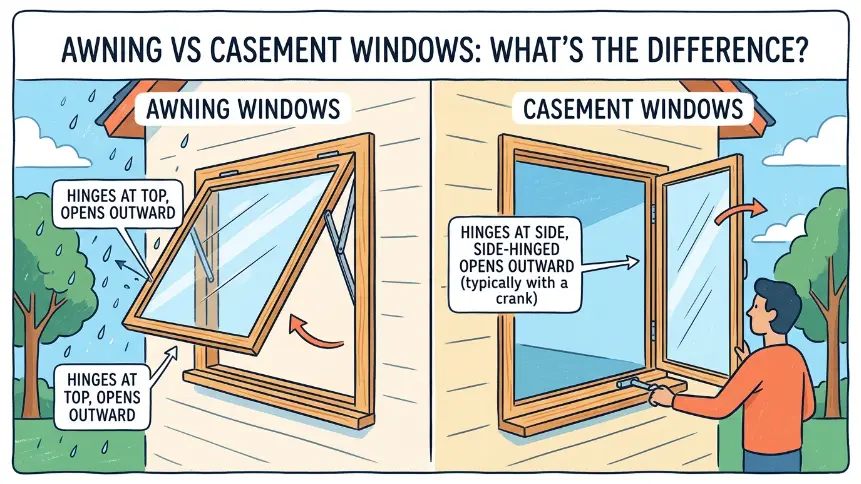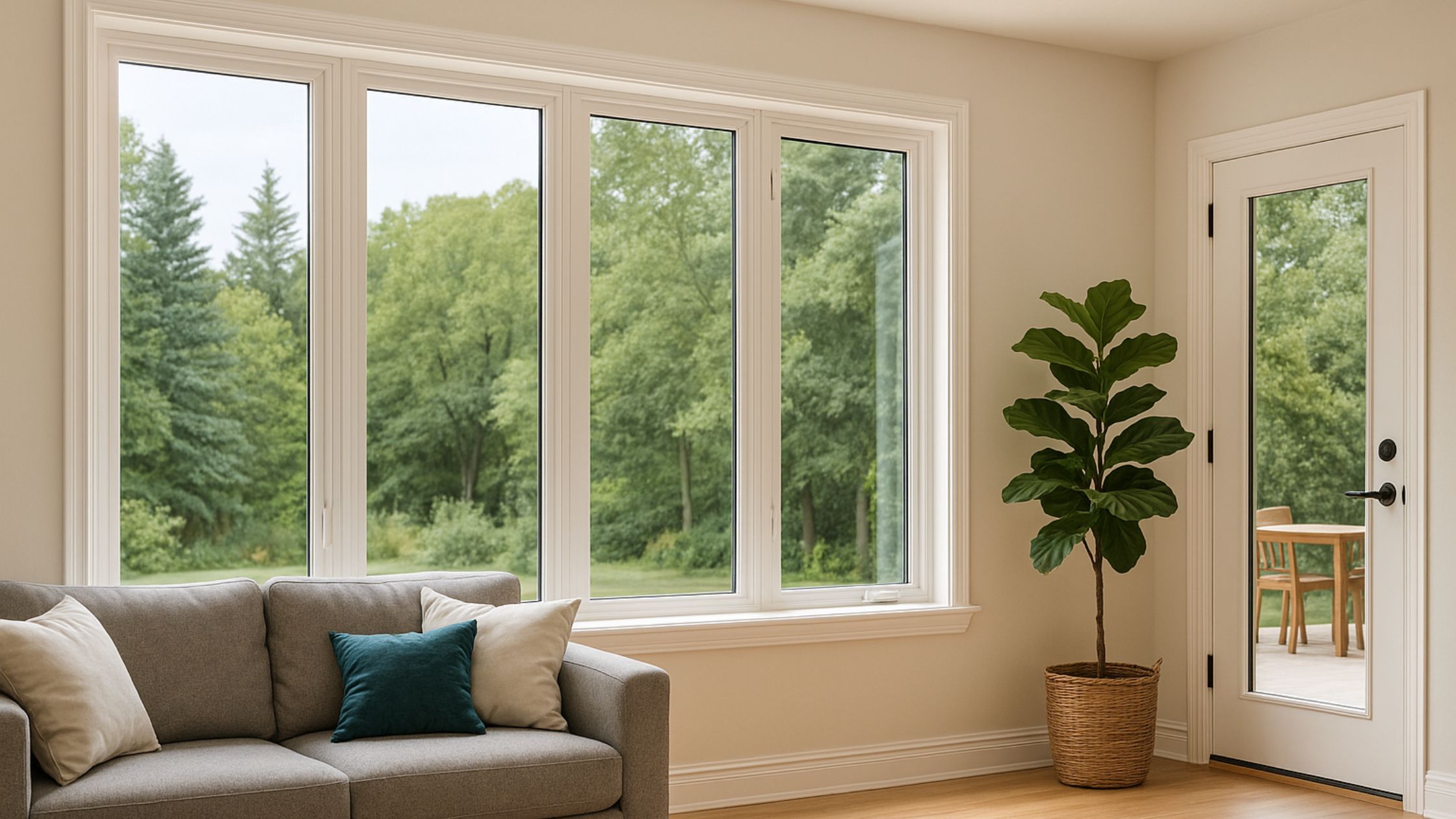
Egress casement windows are basement windows that are hinged on the side and open outward. They swing open fully to create a large enough opening for escape. This makes it possible for people to get out quickly in an emergency.
Many finished basements include bedrooms or living spaces that rely on a window as the only emergency escape route. If the opening is too small, the space may not meet Ontario Building Code safety requirements. Casement egress windows help solve this by maximizing the clear opening area, improving ventilation, and working safely with a window well in below-grade rooms.
Read on to understand how these windows work, the code rules behind them, installation costs, and how to choose the right option for your basement.
What Are Egress Windows?
An egress window is a window designed to provide an emergency escape opening from a bedroom or living area.
In residential buildings, egress windows serve as a required safety exit when a room does not have a direct exterior door. Building codes require these windows to open wide enough for a person to pass through safely.
The opening must also allow firefighters to enter the space if rescue is necessary. For this reason, the window must provide a minimum unobstructed opening and operate easily from the inside without tools or keys. These safety requirements form the basis of the standards commonly described for egress windows.
Basement bedrooms often rely on this window as the only emergency exit. When older homes have small openings, contractors typically enlarge the wall and install a compliant window through professional window installation services
What Is the Difference Between an Egress Window and a Regular Window?
An egress window must provide a safe escape opening that meets building code rules. A regular window mainly provides light, ventilation, and design value. Only egress windows must meet minimum opening size and safety requirements for emergency exit.
| Feature | Egress Window | Regular Window |
| Primary Purpose | Emergency escape and firefighter entry | Natural light and ventilation |
| Building Code Requirement | Required in sleeping rooms without exterior doors | No safety exit requirement |
| Minimum Opening Size | At least 0.35 m² (3.77 sq ft) clear opening | No required escape opening size |
| Minimum Width or Height | At least 380 mm (15 inches) | No minimum dimension |
| Opening Operation | Must open fully without tools or keys | May require effort or only partially open |
| Typical Window Styles | Casement, awning, or large tilt windows | Slider, picture, fixed, or decorative |
| Basement Bedroom Compliance | Required for basement sleeping rooms | Usually too small for safe exit |
| Inspection Requirement | Verified during building permit inspections | Typically not inspected for escape |
| Safety Role | Allows occupants to escape and firefighters to enter | Not designed for emergency escape |
Many older homes in Toronto and Vaughan have tiny basement windows. These openings often fail escape rules, so contractors enlarge the wall and install compliant basement egress windows through window replacement services.
Read More: How New Windows & Doors Help Improve Indoor Air Quality
How Casement Egress Windows Work
A casement egress window works by using side hinges that allow the sash to swing fully outward. This design creates a large, unobstructed escape opening that meets safety rules for emergency exit.
The window connects to the frame through vertical side hinges. When the handle turns, a crank mechanism pushes the sash outward.
This movement opens almost the entire frame, creating a wider escape path than sliding windows. Because of this full opening, many contractors consider casement windows the best window for basement egress in basement bedrooms or living spaces.
Read More: How To Protect Your Home With New Doors and Windows
How Casement Egress Windows Work
A casement egress window uses side hinges so the window sash swings outward. This motion creates a wide emergency escape opening that meets safety requirements for basement bedrooms.
The window sash connects to the frame through vertical hinges and a crank mechanism. When the handle rotates, the crank arm pushes the sash outward. This movement opens almost the entire frame and increases the clear opening area needed for safe exit.
In contrast, sliding windows move along horizontal tracks and usually open only half the frame. That limited opening reduces the usable escape space during emergencies.
Many older GTA homes still have small sliding basement windows. During renovations, contractors often replace them through professional window installation services
What is the purpose of Casement Egress Windows?
The purpose of casement egress windows is to provide a safe emergency exit while helping basement bedrooms comply with Ontario safety regulations.
1. Safe Emergency Exit
During a fire or smoke event, basement occupants need a direct way out. Casement egress windows create a large emergency escape opening, allowing a person to exit quickly and firefighters to enter through the same window.
2. Meet the Ontario Building Code
Basement sleeping rooms must meet Ontario Building Code emergency escape requirements. Casement windows help achieve the required clear opening area (0.35 m²) and minimum dimension needed for a compliant basement bedroom exit.
3. Bring Light Into Basement Rooms
Many homes in Toronto, Vaughan, and Markham have small below-grade windows. Installing larger egress casement windows increases natural daylight, improving visibility and making basement living spaces feel safer.
4. Improve Basement Ventilation
Casement windows open outward using a hinge and crank mechanism, allowing maximum airflow. This helps reduce basement humidity, condensation, and poor air circulation, which are common problems in finished basements.
5. Enable Legal Basement Bedrooms
Homeowners converting basements into bedrooms or rental units must provide a proper basement bedroom egress window. This allows the space to meet safety inspection standards for secondary suites.
Read More: Is Patio Door Replacement Necessary While Building a New Deck?
Where Egress Windows Are Required
Egress windows are required in sleeping areas that do not have a direct door to the outside.
- Basement Bedrooms – If someone sleeps in the basement, the room must include a safe emergency escape opening in case a fire blocks the stairs.
- Basement Apartments / Secondary Suites – Many homes in Toronto, Vaughan, and Brampton have basement rental units. Each bedroom in these suites must include a proper basement bedroom egress window.
- Finished Basement Bedrooms – When homeowners convert part of the basement into a bedroom, the window must function as a safe exit for occupants.
- Bedrooms Without Exterior Doors – If a bedroom does not have a door leading directly outside, an egress window must provide the emergency escape route.
- Below-Grade Sleeping Areas – Rooms located below ground level must include basement egress windows if they are used as sleeping spaces.
Key Benefits of Installing Casement Egress Windows
Casement egress windows improve basement safety, airflow, and renovation compliance while providing a reliable emergency exit for basement bedrooms.
1. Safer Emergency Exit
Basement stairways can become blocked during fires or smoke buildup. A casement egress window provides a direct emergency escape opening, allowing occupants to exit through the basement wall.
2. Works With Window Wells
Most basement windows sit below ground level, so a window well is installed outside the foundation wall. Because casement windows swing outward, they allow easier movement through the window.
3. Easier and Faster Window Operation
Casement windows use a crank handle, operator arm, and hinged sash. This mechanism opens the window smoothly and fully, allowing occupants to create a clear exit quickly.
4. Maximizes Limited Basement Wall Openings
Basement walls are usually made from poured concrete or concrete block foundations. Casement windows use the entire frame opening, making better use of the available foundation wall space.
5. Easier Renovation Approval
When homeowners convert basements into bedrooms, inspectors check the emergency escape opening size and window operation. Installing proper casement egress windows helps the room meet safety requirements.
Egress Window Code Requirements
Egress windows must meet specific Ontario Building Code safety requirements to allow occupants to escape quickly during emergencies.
|
Code Requirement |
Ontario Standard |
|
Minimum Clear Opening Area |
0.35 m² (3.77 sq ft) |
|
Minimum Width or Height |
380 mm (15 inches) |
|
Window Operation |
Must open without tools, keys, or special knowledge |
|
Clear Opening Measurement |
The required opening must be available when the window is fully open |
|
Bedroom Requirement |
Required in sleeping rooms without exterior doors |
| Window Well Clearance |
Minimum 550 mm (21.6 inches) space in front of the window |
| Ladder Requirement |
Required when the window well depth exceeds 1 meter (39 inches) |
During basement upgrades, contractors often enlarge the opening and install compliant escape windows through window replacement services to meet Ontario egress window requirements.
Window Well Size and Safety Requirements for Egress Windows
Window wells for egress windows must provide enough space for safe escape while meeting Ontario Building Code clearance and safety requirements.
| Requirement | Ontario Building Code Standard |
| Minimum Window Well Clearance | At least 550 mm (21.6 inches) space between the window and the well |
| Ladder Requirement | Required when the window well depth exceeds 1 meter (39 inches) |
| Ladder Placement | The ladder must be permanently attached and must not reduce the escape opening |
| Window Well Covers | Covers must open from the inside without tools or keys |
| Drainage Base | A gravel drainage layer is commonly installed to prevent water buildup |
| Typical Contractor Well Size | Many installers use 36–48 inch wide wells to allow easier escape access |
What is the Cost of Installing Egress Casement Windows?
Installing egress casement windows in Ontario usually costs between $2,500 and $7,000 per window. The final price depends on excavation, foundation wall cutting, window well installation, drainage, and the type of casement window selected.
Many homeowners first discover this cost during basement renovations. Older GTA homes often have small basement windows that cannot meet escape rules.
To fix this, contractors excavate around the foundation wall, enlarge the opening, and install a compliant casement egress window with a proper window well. Simple projects may cost around $2,500–$4,000, while installations requiring concrete cutting and drainage can reach $4,000–$7,000. Homeowners often complete this upgrade through window replacement services when converting basements into bedrooms or living spaces.
Read More: Window & Door Installation in Ontario: What to Expect?
How to Choose the Best Casement Window for Egress
Choosing the best casement window for egress means selecting a window that fits your basement foundation wall, works safely with a window well, and performs reliably in the Ontario climate.
1. Align the Hinge With the Window Well Exit
In many Toronto and Vaughan basements, egress windows sit inside a metal or composite window well. The sash should hinge on the side that leaves the clearest path to climb out, avoiding the well wall and ladder.
2. Choose Corrosion-Resistant Hardware
Basement environments often have higher moisture. Look for stainless steel hinges, crank operators, and multi-point locking hardware that resist corrosion and keep the sash operating smoothly over time.
3. Match the Frame Depth to the Foundation Wall
Most GTA homes use poured concrete foundation walls. The casement frame must match the wall thickness so installers can seal the opening properly with flashing and insulation.
4. Plan Proper Exterior Drainage
Window wells should include drainage gravel, a drain connection to the weeping tile system, and waterproof flashing. These elements help prevent water accumulation during heavy Toronto rain or spring snowmelt.
5. Keep the Escape Route Clear Inside
Basement bedrooms often include furniture, shelving, or storage units. Make sure the egress window opening remains unobstructed, allowing quick access if occupants need to exit during an emergency.
6. Fit the Window Around Basement Utilities
Many finished basements contain HVAC ducts, plumbing lines, electrical conduits, or structural beams. Choosing the right casement size helps installers place the escape window without disturbing these systems.
Professional Egress Casement Window Installation in the Greater Toronto Area
Egress Casement Windows play a critical role in making basement bedrooms safer and compliant with modern building standards. If your basement still has small or outdated windows, upgrading to a properly sized egress casement window can improve safety, ventilation, and natural light.
Before starting a basement renovation, always check the escape opening and window well requirements.
If you need professional help planning or installing egress casement windows, our team at Polaris Windows & Doors is ready to guide you and complete the installation safely.
FAQs About Egress Casement Windows
1. What size window qualifies as an egress window?
A minimum egress window size in Ontario must provide at least 0.35 m² (3.77 sq ft) of clear opening area and a minimum dimension of 380 mm (15 inches). These measurements ensure the window functions as a safe emergency escape opening for basement bedrooms.
2. How long does egress window installation take?
Most egress window installation projects take one to two days. The process usually includes excavation, foundation wall cutting, window well installation, and sealing the basement wall opening.
3. Can you add an egress window to an existing basement?
Yes. Contractors can install an egress window in a basement by enlarging the existing window opening in the concrete foundation wall and installing a code-compliant escape window with a proper window well.
4. Do basement egress windows increase home value?
Yes. Adding a basement egress window can increase property value because it allows the basement room to qualify as a legal bedroom, improving both safety and resale potential.