Bay windows are better for structure, cost efficiency, and easier maintenance, while bow windows are better for wider views, more natural light, and a premium architectural finish.
If you want extra usable space and better airflow, bay windows extend outward with a fixed 3-panel angle that fits well in most homes. If your goal is to open up the room visually, bow windows use 4–6 panels to create a smooth curve that brings in more glass area and spreads daylight more evenly.
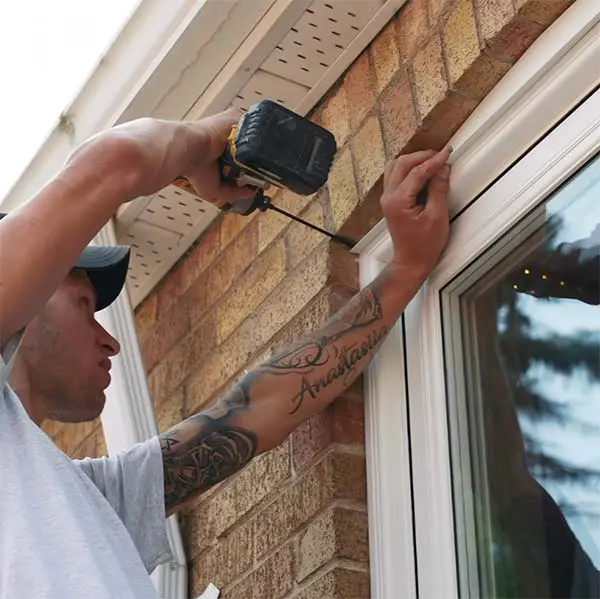
In many GTA homes, this also affects how well the window handles insulation during seasonal temperature changes. That is why professional window installation services matter for a proper fit and long-term performance.
Understanding these differences in bay window vs bow window helps you choose what truly works for your home before installation.
Bay Window vs Bow Window: Key Differences
| Factor | Bay Window | Bow Window |
| Structural Geometry | Rigid 3-panel angled projection with fixed load paths | Multi-panel segmented curve with distributed radial load |
| Installed Cost (GTA) | 1,200–3,800 CAD (lower fabrication + faster fit) | 2,800–7,000 CAD (custom curvature + higher labour precision) |
| Installation Complexity | Uses standard rough opening with minimal on-site adjustment | Requires micro-angle alignment across 4–6 lites for arc accuracy |
| Thermal Performance | Fewer joints reduce air infiltration points | More glazing joints increase sealing dependency |
| Light Distribution | Directional light with defined center focus | Wider diffusion of natural light across room depth |
| Structural Stress Points | Concentrated at side angles and corner seals | Spread across curved joints with cumulative stress zones |
| Maintenance Demand | Lower due to fewer seal interfaces | Higher due to multiple connection and curvature seals |
| Best Application | Standard residential retrofits and compact wall openings | Premium façades, wide elevations, and panoramic design goals |
What is the Bay Window
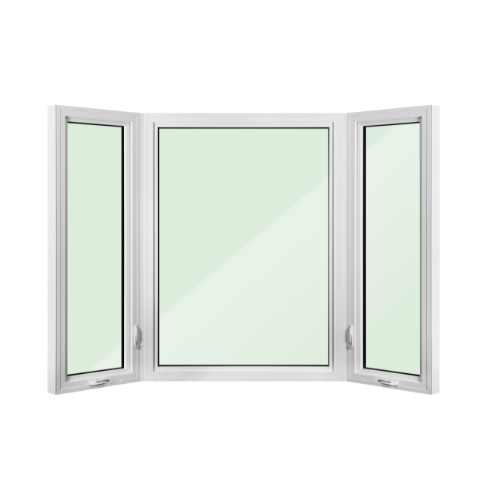
A bay window is a window structure that projects outward from the exterior wall, typically with three panels: a large center window and two angled side windows.
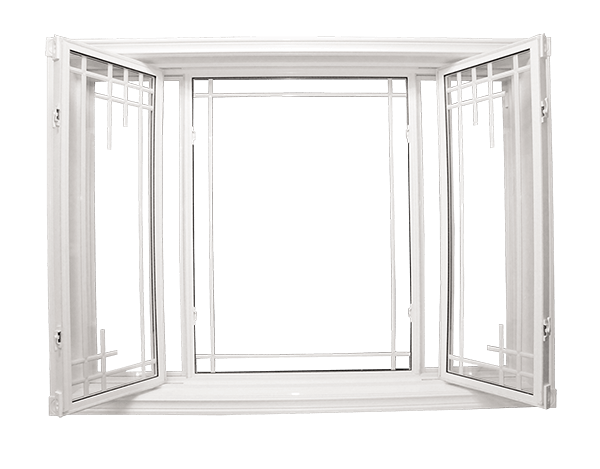
A bay window changes both the structure and performance of your wall opening. The centre unit is usually a fixed picture window for clear views, while side units like casement windows improve airflow control. This angled design increases solar gain, which helps warm rooms during cold GTA winters.
With vinyl windows, insulated frames, and sealed joints, it reduces drafts and improves thermal comfort near the glass. The extended base also supports seating, storage, and plant placement, making it functional beyond just ventilation or light.
What is the Bow Window
A bow window is a curved window structure made of multiple glass panels that extend outward from a building wall. It creates a smooth, rounded exterior shape and brings more natural light into the room, which instantly makes living spaces feel brighter and more open.
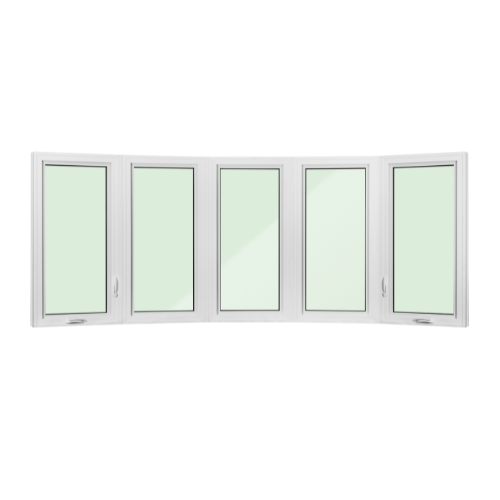
A bow window typically uses four to six equally sized panels joined at slight angles. This wider layout gives you a broader outdoor view compared to flat windows.
As a result, rooms feel less enclosed and more connected to the outside environment. The curved design also helps spread daylight more evenly, especially in living rooms and front-facing spaces where natural light matters most.
What are the Key Differences Between Bay and Bow Windows
1. Window Structure and Design
Bay Windows
A bay window uses a three-panel structure with a flat center and two angled sides. This creates a sharp outward projection that increases interior depth and defines clear structural edges.
For many homeowners in Vaughan, this design fits well in standard living rooms where they want extra space without changing the full wall layout.
Bow Windows
A bow window uses four to six panels arranged in a smooth curve. Each panel connects at slight angles, forming a continuous arc without hard corners.
This design feels more open inside the room and improves the street-facing appearance. It also helps distribute daylight more evenly, which matters during long, low-light winters in the GTA.
Note:
Homeowners often choose professional window installation services when upgrading older homes, especially where insulation and structural sealing are already weak.
Read More: How New Windows & Doors Help Improve Indoor Air Quality
Options and Customizations
Bay Windows
Bay windows use a fixed structural geometry with three panels set at standard angles (usually 30°–45°). This limits how far the frame can extend and keeps installation tied to existing wall openings.
For homeowners in Vaughan, this makes bay windows a practical retrofit option because most older homes already support this framing depth without major structural changes.
Bow Windows
Bow windows use a segmented curved structure where 4–6 smaller frames are joined at incremental angles. This allows a true arc shape instead of sharp projection points.
The result is a wider structural footprint, which increases glass surface area and requires precise load balancing across each connection point.
Installation Complexity
Bay Windows
Bay windows use a pre-defined structural box system. The frame is assembled as a rigid 3-sided unit, then fixed into a rectangular rough opening using load-bearing side studs and a reinforced sill plate.
This makes installation more predictable in Vaughan homes, especially where builders follow standard framing codes. It reduces on-site geometry correction and shortens alignment time.
Note:
Homeowners often choose professional window installation services for bay windows to ensure precise fitting of the 3-sided frame and proper structural alignment during installation.
Bow Windows
Bow windows require segment-by-segment radial calibration during installation. Each panel must be positioned at a calculated micro-angle to maintain a continuous curve radius.
Even a 2–3 mm deviation shifts the arc symmetry, which affects both exterior aesthetics and internal stress distribution across the frame.
For bow windows, professional bow window installation services are often chosen to handle precise curved alignment, where even small angle errors can affect the overall arc and frame balance.
Read More: How To Protect Your Home With New Doors and Windows
Ease of Repair
Bay Windows
Bay windows allow more targeted structural servicing since each panel is independently anchored. If a seal fails or glass cracks, it can usually be repaired without affecting the rest of the structure. This makes maintenance quicker and more convenient for typical home repairs.
Bow Windows
Bow windows are more interconnected, so repairs often require adjustments across multiple sections. Because the panels share tension along the curved frame, fixing one part may involve realigning nearby sections to maintain balance. This makes the process more complex and time-consuming.
Maintenance
Bay Windows
Bay windows are generally easier to maintain because they have a simpler three-panel structure and fewer sealing joints. Most small issues usually start around the corner seals, where tiny air leaks can slowly develop.
If you live in colder areas like Vaughan, Richmond Hill, or Markham, you may notice this more in winter when strong winds create light cold drafts near seating areas by the window.
Bow Windows
Bow windows, on the other hand, need a bit more upkeep since they have multiple curved sections and more sealing points. Each part can react differently to temperature changes and moisture.
In cities like Toronto, Mississauga, and Brampton, homeowners often notice slight uneven cooling or light condensation along the curved areas during peak winter, especially in older insulated homes.
Read More: Leaky Windows After Heavy Rain? The Problem May Not Be Your Windows at All
Customizations Options
Bay windows offer structured, limited customization within fixed angles, while bow windows provide more flexible design through adjustable curves and scalable panel layouts.
See the table below to understand the exact customization options available for each, which gives you more design flexibility.
| Bay Windows | Bow Windows |
| 3-panel configuration (fixed center + 2 sides) | 4–6 panel configuration (expandable layout) |
| Fixed projection angles (30°–45° only) | Adjustable curve radius (tight to wide arc) |
| Limited size expansion based on wall opening | Flexible width expansion across larger walls |
| Standard frame finishes (white, basic colors) | Custom finishes (woodgrain, modern tones) |
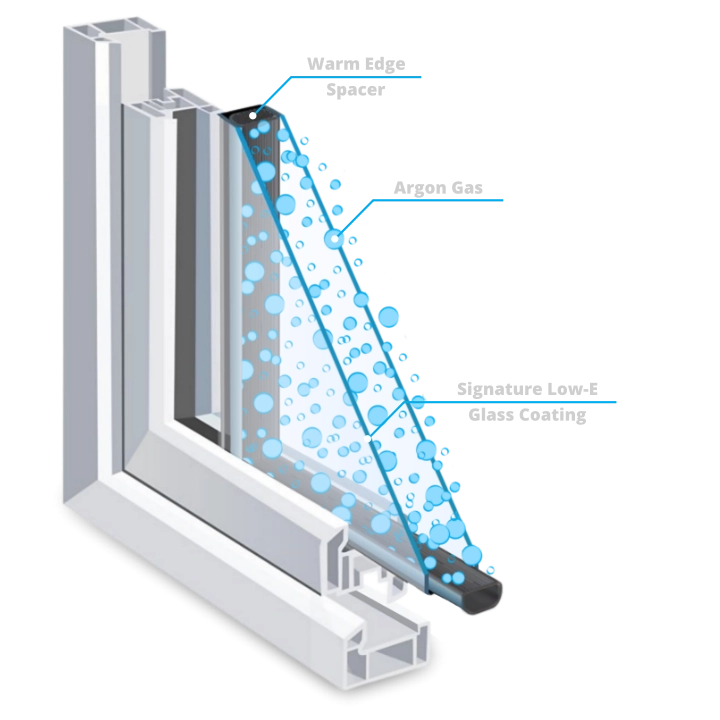
| Basic glass upgrades (double or triple-pane) | Advanced glass options (Low-E, triple-pane, argon-filled) |
| Fixed geometric shape (no curve adjustment) | Curve depth can be customized for visual impact |
You can rely on expert window installation services in GTA to ensure accurate customization, proper sizing, and correct frame setup.
Longevity
Bay windows typically last around 25–40 years with proper sealing and basic maintenance. Their simpler frame design spreads stress more evenly, so joints and seals wear at a steadier rate over time.
Bow windows also last about 25–35+ years, but their lifespan depends more on installation quality and regular seal maintenance. More joints mean more potential wear points.
In GTA cities like Toronto and Mississauga, temperature swings and wind pressure can put extra stress on curved sections, which may lead to faster seal fatigue if not maintained.
Best Use Cases in a Home
Bay Window Use Cases
Bay windows work best where you want space, function, and structure.
- Living rooms (best windows for living room)
- Reading nooks and seating areas (bay window reading nook ideas)
- Front-facing rooms (window styles for curb appeal)
- Dining areas needing extra space
- Bedrooms with limited square footage
- Family rooms need more depth
- Areas where you want windows that add home value
Bow Window Use Cases
Bow windows work best where you want light, width, and a softer look.
- Large living rooms with wide walls
- Open-concept spaces needing more light
- Homes with scenic outdoor views
- Curved exterior designs (bow window design ideas)
- Front elevations needing elegance
- Rooms that feel dark or enclosed
- Spaces focused on natural light spread
Read More: Energy-Efficient Windows: How Ontario Homes Save Big on Hydro Bills
Pros of Bay Windows
- Creates usable seating depth
- Strong structural visual definition
- Better directional airflow control
- Fits smaller wall openings
- Lower framing complexity
Cons of Bay Windows
- Uneven heat distribution inside
- Cold corners in winter
- Limited viewing angle spread
- Exterior snow load exposure
- Seal stress at angled joints
Pros of Bow Windows
- Maximum light angle coverage
- Smooth load distribution curve
- Better panoramic exterior views
- Even daylight across room
- Softer wind resistance profile
Cons of Bow Windows
- Higher long-term seal failure risk
- Frame expansion across multiple joints
- Heat loss across more glass area
- Harder cleaning on outer panels
- Requires reinforced wall support
Bay Window vs. Bow Window Cost
Bay windows in the GTA, including Toronto, Mississauga, Brampton, and Vaughan, typically cost between 1,200 and 3,800 CAD installed. Pricing varies based on structural size, Energy Star-certified vinyl framing, Low-E-coated double or triple-pane glass, and installation complexity within standard residential wall openings.
Bow windows in the GTA generally range from 2,800 to 7,000 CAD installed, especially in areas like Richmond Hill, Markham, and Oakville, where larger custom front-facing designs are common. The higher cost comes from the 4–6 lite curved configuration, precision radial installation, and use of insulated argon-filled glazing systems.
Bay Window vs. Bow Window: Which ONE Should You Choose?
Bay windows and bow windows serve different design goals, so the right choice depends on space, budget, and how much architectural flexibility you want.
Choose Bay Windows if you want:
- A simpler 3-panel structure with lower installation complexity
- A more budget-friendly option for standard residential openings
- Easier maintenance and fewer long-term sealing points
- A sharper, more angular architectural look
Choose Bow Windows if you want:
- A wider, curved panoramic view with more visual impact
- Greater design flexibility with 4–6 panel configurations
- A premium architectural appearance for front-facing façades
- A softer, rounded exterior look with expanded natural light
You can rely on professional window installation services from Polaris Windows to ensure the right fit, accurate sizing, energy efficiency, and long-term durability for your home upgrade.
To Conclude
Choosing between bay window vs bow window depends on your space, budget, and long-term comfort needs. Bay windows offer practicality, lower cost, and easier maintenance, while bow windows deliver wider views and a more premium feel. Focus on your home’s structure and insulation needs before deciding. For the best results, consider professional installation and expert guidance.
Contact Polaris Windows to get tailored solutions and ensure a perfect fit for your home upgrade.
Frequently Asked Questions
Are bay or bow windows better for energy efficiency?
Bay windows are slightly more energy efficient due to fewer joints and sealing points. Bow windows can still perform well with proper insulation and high-quality glazing.
Which window style adds more value to a home?
Both can increase home value, but bow windows often add more visual appeal due to their curved design. Bay windows add functional space, which is also highly desirable.
Can you install bay or bow windows in any home?
Not always, as installation depends on wall structure and available space. Bay windows fit standard openings, while bow windows need more exterior support and width.